Author: laser

  • Survey of Alternative Displays

    lightbeam

    Read this article online here

    Here is a link to the full PDF of my Survey of Alternative Displays:

    ::::::::::: Survey_of_Alternative_Displays_0919a.pdf (5662 downloads )


    (Some formatting got altered when exporting to PDF and links were lost on image captions – here is the docx version as an alternative: Alt_Displays_Formatted_Rough_v6_Final.docx (7100 downloads ) – document formatting is a nightmare)

    Please share, use for teaching, whatever you need – I made this as a resource for others. I’m hoping this helps continue the trend of finding new ways to work with light and information.  Would be great to be credited where appropriate.

    Here are some of the other things I’ve written along these lines that you may find helpful:

    How to keep an Installation up forever

    Guide to Projectors for Interactive Installations

    Guide to Cameras for Interactive Installations


  • Top Albums of 2015

    Well I’ve been doing these album lists since about 2005. Since I left college where I was music director at WRPI, it has been harder and harder to find what the best new music is for the year – I’ll end up going back to old bands or finding albums from previous years that I hadn’t listened to yet. It seems that I only listened to 10-15 albums that actually came out in 2015 this year. That said, here is a rough ranking of the 11 notable albums that I did get to listen to:

    Sufjan Stevens – “Carrie & Lowell”

    Son Lux – “Bones”

    The Velvet Teen – “All is Illusory”

    Battles – “La Di Da Di”

    The Helio Sequence – S/T

    Big Boi & Phantogram – “Big Grams”

    Chvrches – “Every Open Eye”

    Beach House – “Depression Cherry” (Haven’t given their second 2015 album “Thank Your Lucky Stars” a fair listen yet)

    Braids – “Deep In the Iris”

    Heather Woods Broderick – “Glider”

    Mew – “+ -”

    I listened to a few others (Tame Impala, Purity Ring, Jamie XX etc), but these were the ones I probably spent more time with. Streaming environments have made it harder and harder for me to track some of the new stuff I’ve tried out. Streaming also makes it easier to say “Nah…not right now” when an album isn’t really clicking with me and then I don’t end up returning to it. So much variety to explore, but easier to do it in a shallow way instead of trying an album 8 times before giving up on it – but that would be what we call a personal problem, now wouldn’t it?


  • Installing Apple Pro Video formats for QuickLook without FCP/Motion using Pacifist

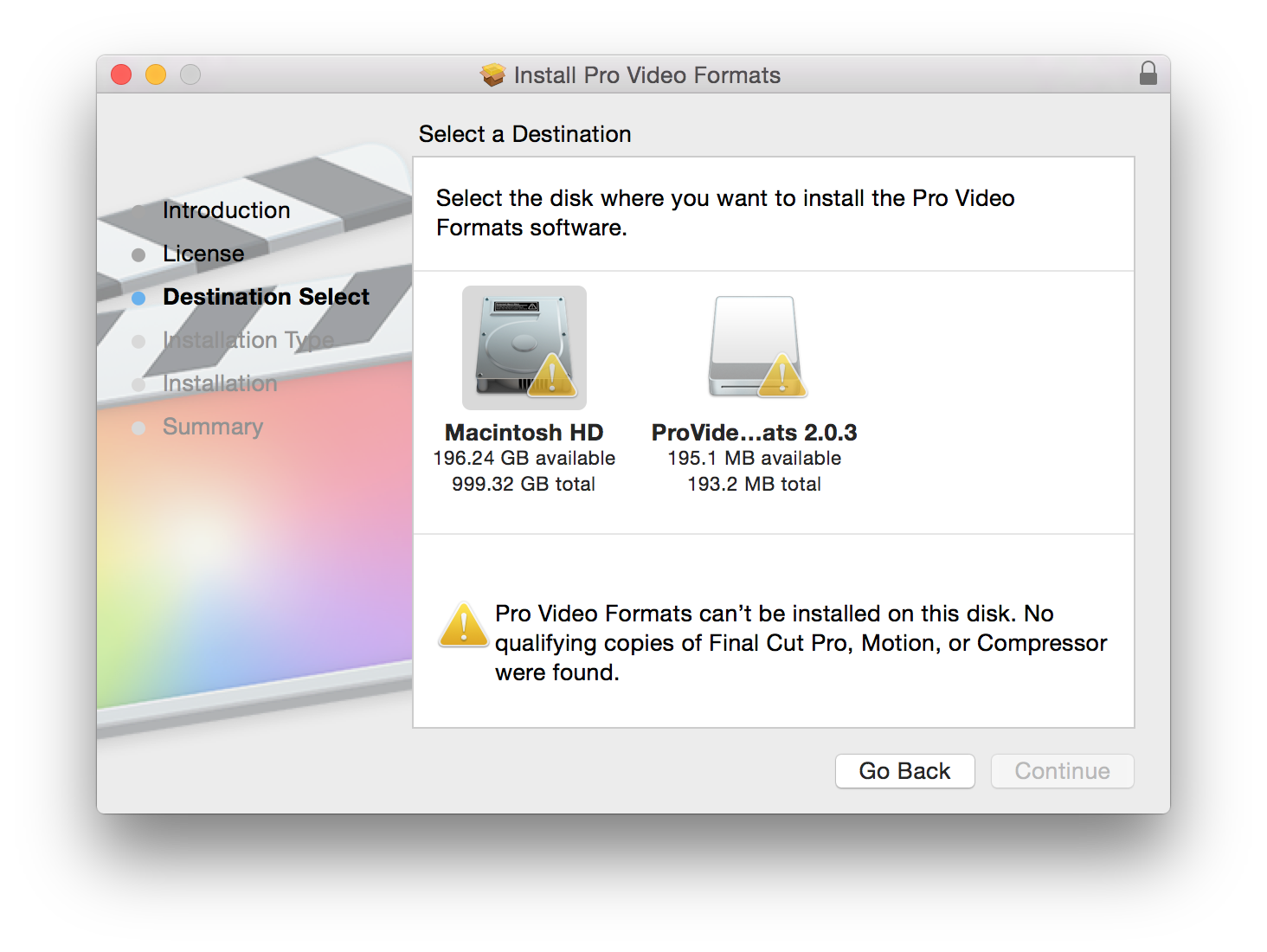
    In order to use certain Pro video codecs on Mac – you need to use Apple’s Pro Video Format’s installer – (version 2.03 available here – or click here to google search for the latest version when this post is outdated) – however – there’s a catch!

    Screen Shot 2015-10-02 at 4.11.19 PMIf you don’t have Final Cut Pro, Motion or Compressor (all paid apps) – you won’t be able to install them. This means you can’t use:

    • Apple Intermediate Codec
    • Apple ProRes
    • AVC-Intra
    • DVCPRO HD
    • HDV
    • XDCAM EX / HD / HD422
    • MPEG IMX
    • Uncompressed 4:2:2

    These codecs are necessary for use in third party apps such at the 64bit version of VDMX, or with Adobe Premiere or After Effects. If you install them, they will also enable the ability to view Pro Video codecs with QuickLook and Quicktime Player X – so convenient – surely there must be a way to pull them out of the installer without paying for the Pro Apple Apps?

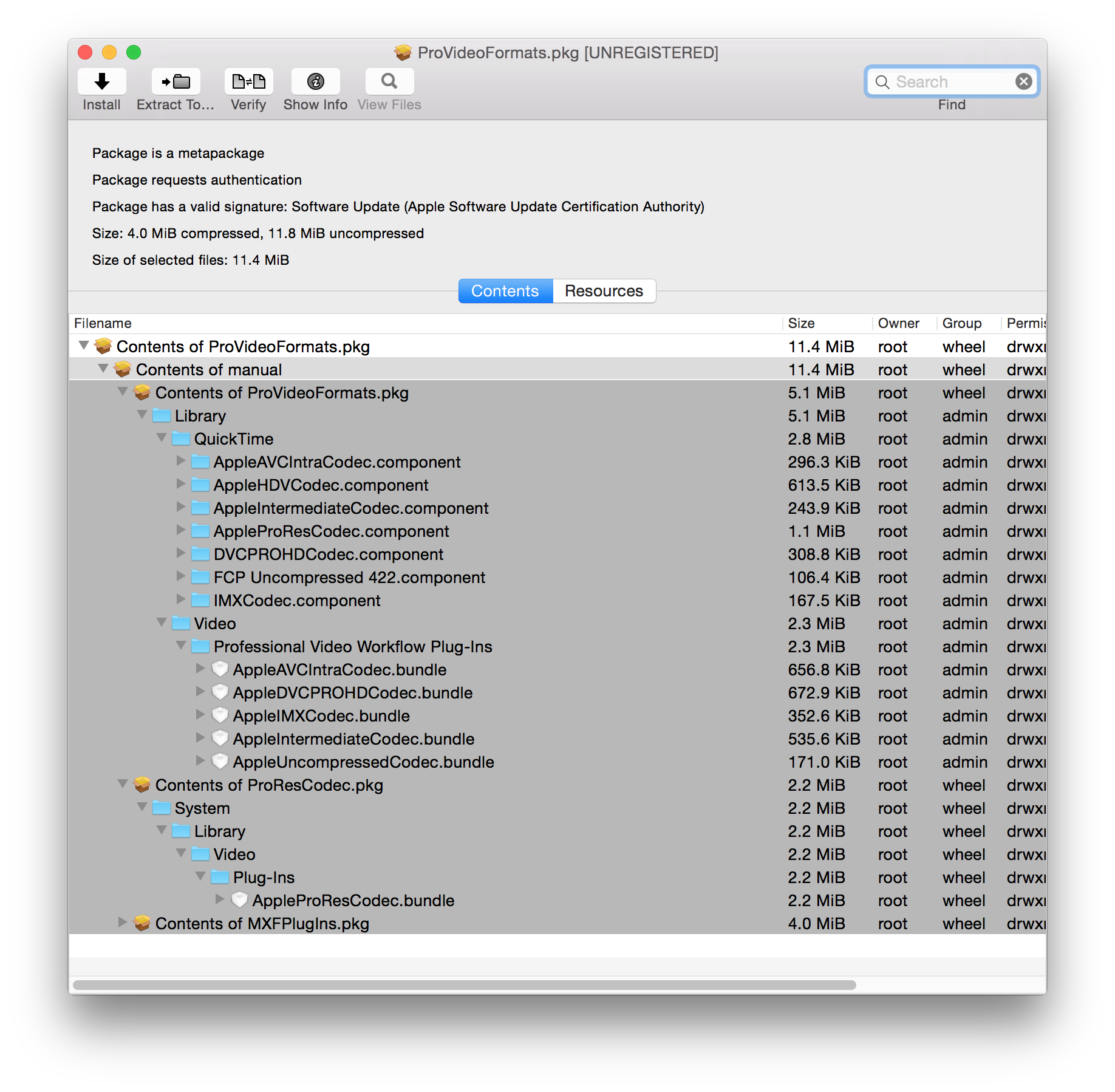
    Enter Pacifist – this piece of software lets you extract elements out of the .pkg installer files that come with some software.

    1. Download Pacifist
    2. Open the ProVideoFormats.pkg found in the dmg you downloaded from Apple
    3. Once open, you can see that the package contains everything you needScreen Shot 2015-10-02 at 4.19.48 PM
    4. Now you can just select the top option “Contents of ProVideoFormats.pkg” and then click “Install” in the upper left and it will install it in the intended locations.


    And that’s it! Now you should be able to use Pro Res and other pro formats in Quicktime Player X and QuickLook.

  • Top Albums of 2014

    Late to the party as I’m posting this in 2015 – but I’ve been trying to do some form of this since 2004, so I figured I’d do my best to make a decent list for my own records.

    Unfortunately, this year I didn’t do a fantastic job of keeping up with the newest music so I don’t quite have enough albums to actually fill out a full top 10. I also spent away too much time listening to one album. I definitely have a favorite album of the year, but the ranking after that isn’t as clear to me, so I’ll just kind of mix them all in no particular order.


    Favorite album of the year:

    • The Antlers – Familiars

    Spotify Link

    This album definitely didn’t pique my interest on the first few listens, but as I continued to listen, more and more details began to reveal themselves. 35 full play-throughs later, and this is one of those rare albums where I don’t skip a track, and every few weeks I’d find a new track was my new favorite. There are a lot of subtle details to be found and picked apart, and the emotional space of the album is ambiguous but very engaging. It also feels very consistent and complete, almost like a concept album, but where each song can easily stand on it’s own without sounding repetitious.

    Favorite tracks: Revisited (that guitar at the very end…), Hotel, Palace


    Other great 2014 albums:

    • Phantogram – Voices

    Spotify Link

    Phantogram’s long awaited second LP Voices had a bunch of new tracks, and some older ones I had been hearing for a little while, some of which came out on their 2013 LP. The album has a lot of standout tracks, but some of the sleepers are quite good as well. They still manage to have a sound that is totally unique to them, but still very crowd pleasing. I’m also honored to have been able to play live visuals with them on several occasions, including a show this year that promoted this album.

    Favorite tracks: Fall in Love, Bad Dreams, I Don’t Blame You

    • Conor Oberst – Upside Down Mountain

    Spotify Link

    I may never get another Bright Eyes album, but this felt very close to one of those. Not every track managed to get me, but there were some great moments in there, especially lyrically, and the backing band is fantastic.

    Favorite tracks: Time Forgot, Artifact #1, Night at Lake Unknown

    • First Aid Kit – Stay Gold

    Spotify Link

    Swedish alt-country with a pair of lovely voices. What else could you ask for?

    Favorite tracks: My Silver Lining, Stay Gold

    • Hundred Waters – The Moon Rang like a Bell

    Spotify Link

    I discovered this one pretty late in 2014, but it’s been growing on me. Out Alee is easily one of my favorite tracks of the year with it’s unusual rhythms and dreamy melodic line.

    Favorite Tracks: Out Alee, Murmurs

    • Paul Thomas Saunders – Beautiful Desolation

    Soundcloud Link

    Random find from hearing a track on a TV show. Really lovely stuff from a UK artist with a great voice and really spacey but detailed and structured instrumentation.

    Favorite tracks: A Lunar Veteran’s Guide to Re-Entry, Good Women

    • Todd Terje – It’s Album Time

    Spotify Link

    Honestly I don’t listen to this album on my own time that much, but this is hilarious and epic background music for any situation.

    • The War On Drugs – Lost in the Dream

    Spotify Link

    Also discovered this very late in 2014, so it’s still growing on me. Has the feel of 1980’s Americana/rock with an extra subtle psychedelic layer

    • Lucius – Wildewoman

    Spotify Link

    This album actually came out in 2013, but I didn’t discover it until mid-2014. Great album, great range of songs, and the vocal talent is mesmerizing. I got to see them live recently, and their live show is miles above most bands of their size/age/popularity…so definitely one to keep an eye on.


    Most anticipated album of 2015: The Velvet Teen’s new, currently untitled album. First album since 2006’s Cum Laude

  • Who shares code with artists?

    There has always been a slight tension between ad agencies and artists and the line between borrowing and stealing, even before all this “new media” business. Visual artists, graphic designers and animators have had their methods and styles borrowed or stolen for decades. This borrowing or stealing is nothing new, it is just new for this particular art form. The current version of this tension has been discussed in various articles and talks, notably Golan Levin’s “New Media Artists are the Unpaid R&D of Ad Agencies.”

    I’ve worked at an experiential design company in Brooklyn called Fake Love for three years, and we do a lot of commercial work, as well as art works. We are a small crew of about twelve, with three in-house developers including myself. Almost every project we have done has used some degree of open source software or hardware, and we understand and appreciate open source’s role in supporting a large part of our industry and livelihood. I wouldn’t have the awesome job I have without open source artist tools – period. It’s no surprise then that we’re big into sharing as much as we reasonably can to give back to the community that helps us so much. We’re still learning how to give back in different ways, and we still have a lot to learn ourselves. Luckily, we’re not alone at all, and there are tons of amazing production companies/agencies/collectives/studios doing fantastic jobs of sharing stuff too.

    Github is a website where individuals and organizations can publicly or privately collaborate on coding projects, and share the fruits of those projects with others. There are other sites that do this, but Github is the most widely used at the moment. I compiled this list of organizations that post some of their code to Github – I did this to create a resource and to highlight a list of companies posting at least a little bit of the code they work on day to day:

    Company/Agency/CollectiveGithub Link
    Adafruithttps://github.com/adafruit
    AKQAhttps://github.com/akqa
    B-Reelhttps://github.com/B-Reel
    Barbarian Grouphttps://github.com/thebarbariangroup
    Barbarian Group/Cinderhttps://github.com/cinder
    BBDOhttps://github.com/BBDO
    Breakfast NYhttps://github.com/breakfastny
    CLOUDShttps://github.com/CLOUDS-Interactive-Documentary
    Deep Localhttps://github.com/deeplocal
    Digitashttps://github.com/digitashttps://github.com/digitas
    Dpt.https://github.com/morethanlogic
    Dreamworkshttps://github.com/dreamworksanimation
    Fake Lovehttp://github.com/fakelove
    Fieldhttps://github.com/field
    Framestorehttps://github.com/framestore
    Googlehttps://github.com/google
    Google Creative Labshttps://github.com/googlecreativelab
    Google Data Artshttps://github.com/dataarts
    Havas Worldwidehttps://github.com/MadSciLabs
    Helios Interactivehttps://github.com/HeliosInteractive
    Hellicar and Lewishttp://github.com/hellicarandlewis
    IDEOhttps://github.com/ideo
    IDEO Digital Shophttps://github.com/ideo-digital-shop
    Intel Perceptual Computinghttps://github.com/IntelPerceptual
    LAB at Rockwell Grouphttps://github.com/labatrockwell
    Legworkhttps://github.com/legworkstudio
    Local Projectshttps://github.com/local-projects
    Microsofthttps://github.com/msopentech
    Midnight Commercialhttps://github.com/MidnightCommercial
    MPC Digitalhttps://github.com/mpcdigital
    Otherlabhttps://github.com/otherlab
    Pixarhttps://github.com/PixarAnimationStudios
    Potionhttps://github.com/Potion
    Psy Ophttps://github.com/Psyop
    Razorfishhttps://github.com/razorfish
    Red Paper Hearthttps://github.com/redpaperheart
    Sapienthttps://github.com/sapient-global
    Sapient Nitrohttps://github.com/sapientnitro
    Second Storyhttps://github.com/secondstory
    SparkFunhttps://github.com/sparkfun
    Stimulanthttps://github.com/stimulant
    Stopphttps://github.com/stopp
    TBWAhttps://github.com/tbwa
    The Rumpus Roomhttps://github.com/therumpusroom
    Vidvoxhttps://github.com/Vidvox
    Warp Records/Unit 9https://github.com/warprecords
    YCAM Interlabhttps://github.com/YCAMInterlab
    Your Majestyhttps://github.com/Your-Majesty

    These sampled companies vary wildly in size from half a dozen people to large global corporations. These are also just companies that I am aware of that do something vaguely artistic with code, I did a little bit of research but it can be hard to track down exact Github pages. If someone thinks someone should be added to the list, please get in touch with me – or add your own links to this public Google Spreadsheet. You can also see a list of agencies sorted by “stars” – Github users can “star” repositories that they find useful, so it provides a bit of a metric for who is providing useful code – link here

    It’s important to note that sharing code isn’t the only way to keep the community healthy. Some companies aren’t particularly good at the code sharing aspect, despite having a Github. A public Github alone doesn’t get you a “I did the right thing” pass. Some shared code is old, poorly documented, sparse, or such a niche application that it would hardly be useful to anyone else without putting more time in to figure out what it does (and if it even does it well). Let’s also be clear that sharing an entire project that you made for a client can rarely be useful to a large audience. In my experience, most projects in this realm are made on tight timelines and leave little time for proper organization and cleanup.  The best parts of the project may be tucked away in a single class that would be more useful as a tool or individualized example that you break out after the fact. All this sharing step takes is a little time and planning. In addition to sharing code, as noted in Golan’s talk, it is also very important to reach out to artists, to credit them, to cite them and perhaps most useful – to pay them.

    Right now, a lot of artists don’t explicitly ask for money for the creations they share – typically on good faith. Artists and agencies work in their own economies, and when the work between them overlaps there needs to be awareness of those differences. The currency of these sharing artists is time, the current of agencies is money. To support the producers of the sharing economy, they can provide citations and sometimes money. It can be rough out there for a principled artist who doesn’t do commercial work but loves to share their code and methods regardless. In a way, it’s a risk artists are taking. Their carefully crafted code built for an honest and compelling artwork can both further the field for other struggling artists, and be used in a goofy stunt to sling sugar water.  Of course even if other artists use this carefully crafted code, they can make a piece of shit artwork just as easily an agency can make a piece of shit campaign. The difference is who gets paid for it, how much they got paid for it, the credits and the promotion that comes out of it. I’ve seen the budgets for some of these commercial projects, and they far eclipse the typical amounts you’ll see available for other comparable artworks. A tiny fraction of these massive budgets can be set aside to pay artists for their work.

    One way artists can guide the usage of their work is by applying specific licenses to their work as a modest (and occasionally legally binding) request of “This is the way I would like my work to be used in the future.” As it is now, many of these licenses that artists apply are fairly lenient and don’t always make a distinction between their use in commercial or non-commercial work. Most just ask that you give attribution or share back what you built with the community. Of course, it may not always stay this way.

    A big part of making sure this open and free environment remains open and free falls to the responsibility of the agencies, production companies, collectives, studios who are using and profiting from the code and technical developments made by independent artists. Much of the industry’s future relies on artists going through school or training to build the tools that may be used in tomorrow’s experiences – it’s likely that the artists will want to see that path as being able to provide a sustainable living. At the moment there is more money, stability and human resources available to these larger companies. Returning to the opening point –  borrowing and stealing from artists has been going on for decades, but for the same amount of time organizations and individuals have also had the option to find a way to do the right thing.

    ————————————————–

    Thanks to Kyle McDonald, Golan Levin and Dan Moore for providing input on this writeup.

  • New Code – ofxCoreImage, ofxQuneo

    Been working on some of my first openFrameworks addons – figured it made sense to post them here in case anyone has trouble finding them on my github:

    ofxCoreImage

    Ever since transitioning from using Quartz Composer to openFrameworks, I wanted the ability to use the easy OSX Core Image filters inside OF apps. After finding an example online, I built out an addon that does just that. You can use about 70 of the 130+ built in filters – I just need to provide class breakouts for the other filters.

    It’s still in development for now and needs some issues fixed with getting input and output properly and working with the GL Contexts so that I can properly use a GLFW window.

    ofxQuNeo

    71vhiJAto0L._SL1500_

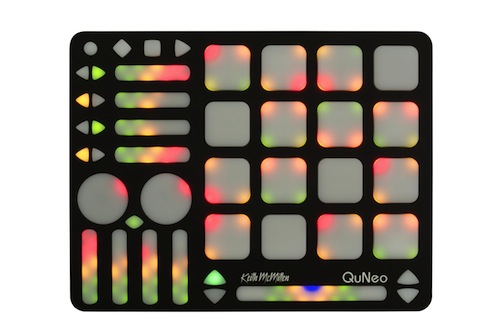
    This addon does a breakout of the QuNeo MIDI controller so that you can send its values out over OSC and easily access them in your program if you need a quick physical interface without decoding all the control values.

    There is also a breakout for the Akai MPD24 that does the exact same thing, but wasn’t sure if there would be much demand for that as a separate addon.

    ofxCalibrate

    This is a simple addon for when you’re trying to debug something with your display or projector. Does checkerboards, single pixel grids, animated gradients, etc etc. More coming soon hopefully.

    Trig_Movies

    I have been revisiting my old visual performance Max/Jitter patch and I decided to make it publicly accessible. The only thing I can’t post are some shaders that have questionable licensing agreements attached to them, but if you remove those modules it should work just fine.

  • 3DFFT Sonic Prints new samples

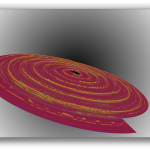
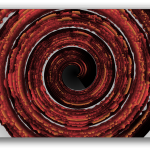
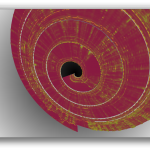
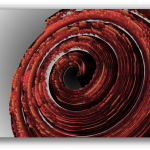
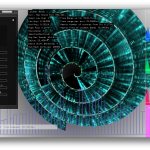
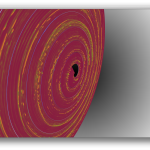
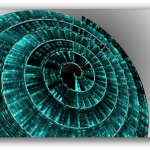
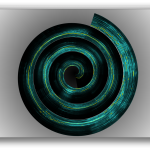
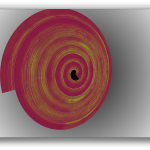
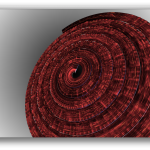
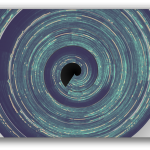
    I’ve continued to play with my 3DFFT software that takes incoming audio and generates a 3D mesh from the FFT information. I’ve been playing with some different types of music and gotten some really nice varying results. Some slow ambient songs are like dragging a paintbrush in a circle (Hammock), while more rhythmic songs have more of a stippling pattern (Haim and Animal Collective). These results were normalized but with a little too much of a hard cutoff, I’m trying to get a look for these that keeps them from exploding too much, but still keeping a little more texture. Doing selective coloring really makes a difference as well. I’m hoping to make some more physical renders of these in the near future with a CNC instead of a 3D printer so that the larger size can enhance some of the details. I also hope to work out the kinks soon so that I can release the code for other to use for making their own sound prints.

  • 3DFFT Sonic Prints new samples

    I’ve continued to play with my 3DFFT software that takes incoming audio and generates a 3D mesh from the FFT information. I’ve been playing with some different types of music and gotten some really nice varying results. Some slow ambient songs are like dragging a paintbrush in a circle (Hammock), while more rhythmic songs have more of a stippling pattern (Haim and Animal Collective). These results were normalized but with a little too much of a hard cutoff, I’m trying to get a look for these that keeps them from exploding too much, but still keeping a little more texture. Doing selective coloring really makes a difference as well. I’m hoping to make some more physical renders of these in the near future with a CNC instead of a 3D printer so that the larger size can enhance some of the details. I also hope to work out the kinks soon so that I can release the code for other to use for making their own sound prints.

  • Top Albums and Songs of 2013

    Been doing this yearly tradition since 2005! Unfortunately I believe I only listened to about 20 full brand new albums this year, so my full list is going to be a bit biased towards that small sampling of albums. Anyway – let’s get to it! The list isn’t really in a particular order…but if I were forced at gunpoint to choose my top 10 albums of 2013, it might look something like this:

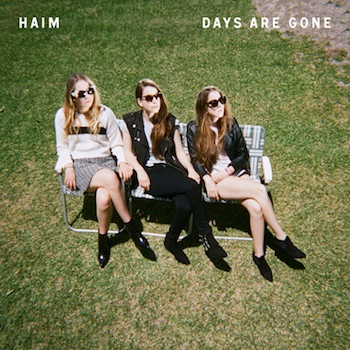
    1. Haim – Days are Gone

    haim-days-are-gone-400x400

    I can’t fully explain what it is about this album that makes it my favorite of the year. I enjoy every song that comes on, the song structures are unique, the musicianship is tight and wonderful, the girls voices are really great…etc etc. It’s a fantastic pop album with a lot of little nooks to explore as you continue to listen.

    Top Songs: Falling, Days are Gone, Don’t Save Me

    2. Annuals – Time Stamp

    Annuals_TimeStamp

    Fantastic 3rd and possibly final album from North Carolina based Annuals. I was a massive fan of their first album Be He Me in 2006. Their second one Such Fun was also a good listen, but not quite as solid. I feel like Time Stamp was a little bit of a return to form in terms of odd instrumentation, and song topics.

    Top Songs: Omnicide, I Don’t Care, Whippoorwill

    3. Son Lux – Lanterns

    a3548728279_2

    A true follow up to his debut At War with Walls and Mazes (my #1 album of 2007), Son Lux’s Lanterns was another fantastic journey into a musical world created a master composer who happens to write little short gems. 2011’s sophomore album, We Are Rising is great too, but written, recorded and composed in only 28 days. On Lanterns it’s clear to me that a little more time is definitely helpful for wrangling these complex ideas. When that pedal steel fades in on the opener Alternate World, it’s beautiful and heartbreaking at the same time. There is a massive amount of care and planning that goes into every facet of these compositions, and it really comes through on Lanterns. The important thing is that no one else sounds quite like this…

    Top Songs: Alternate World, Lost it to Trying, Plan the Escape

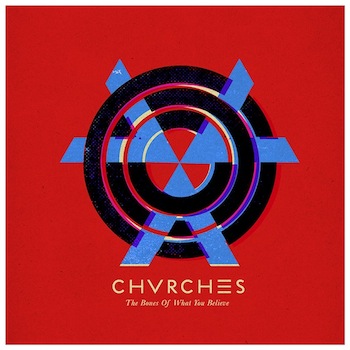
    4. Chvrches – The Bones of What you Believe

    21dd905b

    This is one of those bands that I really liked in the year, but I’m curious to see how they hold up. It was one of those situations where it was like “This band really sounds like what a band would sound like in 2013” with odd old influences and a touch of new stuff. The singer’s voice is also pretty irresistible. Unfortunately, this is also an album that got burned out super quickly for me, so it’ll be a while before I revisit. Top Songs: Gun, Night Sky, Recover

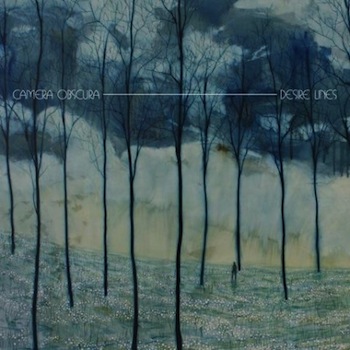
    5. Camera Obscura – Desire Lines

    Desire_Lines_(Camera_Obscura_album)

    Another solid showing from Camera Obscura. Not really a band that re-invents themselves from album to album, but there was still a lot of really gorgeous stuff going on here, and some songs I found myself returning to over and over.

    Top Songs: This is Love (Feels Alright), William’s Heart, New Year’s Resolution

    6. Braids – Flourish//Perish

    e904b7b1

    This album was a bit of a different beast from their debut Native Speaker, with some tighter song structures and some shuffling on instrumentation and vocals as a result of a band member leaving. I’m really drawn to the unusual song structures and the personal/ethereal lyrics and singing.

    Top Songs: December, Fruend, Victoria

    7. Lorde – Pure Heroine

    81UCy35CwhL._SL1500_

    Top Songs: Buzzcut Season, 400 Lux

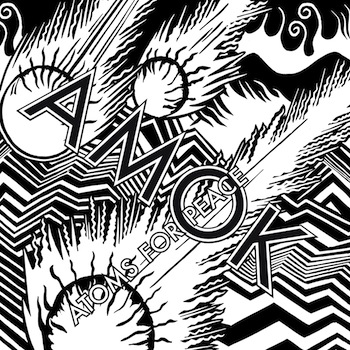
    8. Atoms for Peace – Amok

    Atoms-for-peace-AMOK-cover

    Top Songs: Default, Ingenue

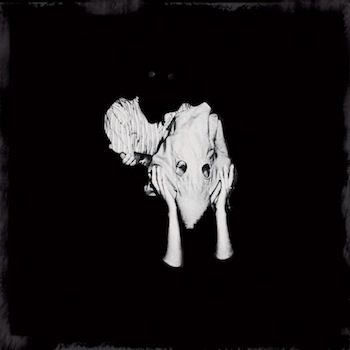
    9. Sigur Ros – Kveikur

    634904060619-1371488994

    Top Songs: Brennenstein, Kviekur

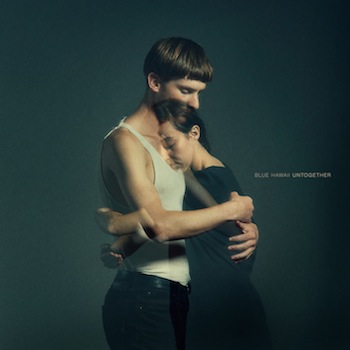
    10. Blue Hawaii – Untogether

    BH_lp_1425

    Top Songs: Sierra Lift, Try to be

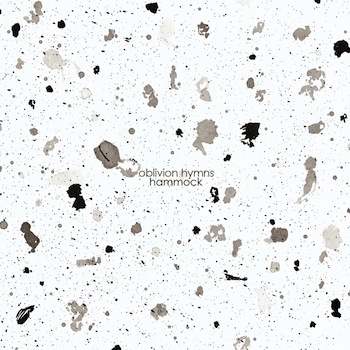
    11. Hammock – Oblivion Hymns

    a2167329800_10

    Top Songs: Then the Quiet Explosion


    Top anticipated albums for 2014: Phantogram, The Velvet Teen, and Hooray for Earth

    Previous lists:

    2012

    2011

    2010

    2009

    2008


  • How to keep an installation up forever – Part 2

    This is a new post following my previous article: How to keep an installation up 4evr

    In this addendum, I’m going to outline some new tricks you might find useful for keeping long running installations going – or at least so you can keep an eye on them. I’m keeping an eye on 3 separate, complex installations at work right now so I needed some new tools to make sure everything is running smoothly. Please let me know if you have any new tricks to add in comments below!

    Most of the tricks try to avoid third party software and just use the base OS X/Unix tools available as they would (hopefully) be the least error prone methods and sure to work with the system you’re on.

    1. Process Logger

    If you have an installation that runs for weeks or months, you might want a way to keep tabs on it that doesn’t involve remotely logging in and checking on it. A good thing to have would be to have something on the system that writes certain info to a text file (kept on a linked Dropbox), or better write that file to a web server that you can then check.

    There are a couple things you can do depending on what you want to know about the state of your installation.

    There is a terminal command you can use to get a list of all of the currently running processes on your computer:

    ps aux (or ps ax)

    (more info above ps commands here) – Further more you can filter this list to only return applications you’re interested in learning about:

    ps aux | grep "TweetDeck"

    This will return a line like this:

    USER             PID  %CPU %MEM      VSZ    RSS   TT  STAT STARTED      TIME COMMAND
    laser          71564   0.4  1.7  4010724 140544   ??  S    Sun03PM  14:23.76 /Applications/TweetDeck.app/Contents/MacOS/TweetDeck -psn_0_100544477
    laser          95882   0.0  0.0  2432768    600 s000  S+   12:11PM   0:00.00 grep TweetDeck

    Now you have the following useful info: CPU usage, Memory usage (as percentage of total memory), Status, Time Started, Time Up

    All that is left is to write this output to a text file, which you can do with a line like this:

    ps aux | grep 'TweetDeck' >> /Users/laser/Dropbox/InstallationLogs/BigImportantInstall/Number6ProcessLog.txt

    Now we just need to make this an executable shell script and set it up as a launch daemon or cron job – see the previous article at Step 3 to learn how to run the shell script at a regular interval using Lingon and launchd. If the app isn’t running, it will only return the “grep YourAppName” process which is a good thing to log because if your app isn’t open you won’t know how long it’s been out (nothing will be logged), but having the grep process logged will at least tell you it was checking for it. Grep will also more accurately tell you what time it checked – the other app will only give you a start time and up time.

    Let’s also take this one step further and say, hypothetically, that the Triplehead2Go display adapter you have is fairly wonky and you don’t always get the displays or projectors to connect after reboot – or maybe a projector is shutting itself off and disrupting things. Well we can log the currently available resolutions too! Try entering the line below in your own terminal:

    system_profiler SPDisplaysDataType

    This will return a list of connected displays and some metadata about them including resolution and names.

    Let’s say you want to make sure you’re running a resolution of 3840×720 at all times…or you want a log of resolution changes. You would do something like:

    system_profiler SPDisplaysDataType | grep Resolution

    This will return “Resolution: 3840×720” which you can combine with the above lines to write it all to a text file. So here would be your shell script file if you wanted to record the currently running processes and the current resolutions:

    #!/bin/bash
    ps aux | grep 'YourAppName' >> /Users/you/filepath/Install6ProcessLog.txt
    system_profiler SPDisplaysDataType | grep Resolution >> /Users/you/Dropbox/Install6ProcessLog.txt

    And now you’re feeling excited, maybe you want to grab a fullscreen screenshot at a regular interval too, just to make sure there is no funkiness happening that you can’t see…well you could add this line to the above as well:

    screencapture ~/Desktop/$(date +%Y%m%d-%H%M%S).png

    This will save a screenshot to the desktop (specify your own file path) with a formatted date and time. You may want to do this every hour instead of every 5 minutes since it’s a big chunk of data and it may cause some issue with your screens. As usual – test before deploying!

    Bonus points would be to create an auto-generated table and webpage that takes all of this info and puts it into a nice view that you can use to check all of your installations at a glance.


    2. Email Yourself on crash or other behavior

    If the process logger isn’t enough, we can use what we learned in that process to actually set up a system to email you if something is amiss so you don’t have to manually check it. We can do this all with the command line and internal tools, it’s just a more involved setup. This is going to be fairly general and will need some tuning in your specific case.

    First you will need to configure postfix so you can easily send emails from the terminal – follow the instructions here as closely as possible: http://benjaminrojas.net/configuring-postfix-to-send-mail-from-mac-os-x-mountain-lion/

    If you were using a gmail account you would do:

    InstallationSupport@gmail.com

    pass: yourpassword

    The line in the passwd file mentioned in the article would be: smtp.gmail.com:587 installationSupport@gmail.com:yourpassword

    Now send a test email to yourself by running: echo “Hello” | mail -s “test” “InstallationSupport@gmail.com”

    Second step is to combine this new found ability to send emails from the Terminal with a process to check if your application is still running…something like the below would work with some tweaking for what you’re looking to do:

    #!/bin/sh
    if [ $(ps ax | grep -v grep | grep "YourApp.app" | wc -l) -eq 0 ] ; #Replace YourApp.app with your own app's name     
    then
        	SUBJECT="Shit broke"
        	EMAIL="InstallationSupport" #this is the receiver
       	 EMAILMESSAGE="This could be for adding an attachment/logfile"
       	 echo "The program isn't open - trying to re-open">$SUBJECT
       	 date | mail -s "$SUBJECT" "$EMAIL"  "$EMAILMESSAGE"
    
        	echo "YourApp not running. Opening..."
    
        open /Applications/YourApp.app #reopen the app - set this to an exact filepath
    else
        echo "YourApp is running"
    fi

    Now you just need to follow the instructions from Step 3 in the other article to set this shell script up to run with launchd – you can check it every 5 minutes and have it email you if it crashed. You could also adapt the If statement to email you if the resolution isn’t right or some other process condition.

     
    3. Memory leak murderer

    See this article about combining the above process with something that kills and restarts an app if it crosses a memory usage threshold

    Bonus – if using MadMapper – see this link for an AppleScript that will open MadMapper and have it enter fullscreen – and enter “OK” on a pesky dialog box.